Basic Equipment Needed For Underwater Photography


Underwater photography is one of the most breathtaking mediums to be involved in. However it requires very specialized equipment to be successful. It takes more than just a waterproof case to make these shots come out perfectly. Filters and lenses are often required, on top of any other recording you might want to do, these are just for standard photos. Here are a few things you will need for your camera if you decide to try underwater photography.

Photography
Scuba Filters

Scuba Filters


There are two big problems with taking photos underwater. The first is color correction. Many shots look slightly off color because of the surrounding blue, or reflections through the water. This also makes sunlight a rather difficult obstacle for underwater photographers. Filters keep these unfortunate elements from effecting a shot. It also helps highlight certain aspects of the shot, like fish and colorful reefs. Shiny surfaces and similar things are also much easier to capture, as they tend to throw off colorations and cause flairs.

Stands

Stands


Stands are very important when you are photographing underwater. They provide you with a firm handhold underwater, and give you a lot of control when you are focusing on a subject. They also let you set the camera down if you are near the bottom, and even leave it for some alternative types of capturing pictures. Mounts let you put the stand on a scuba outfit, the underside of a boat, and many other amazing scenic shots. Stands with grips can be used for more extreme shots, like while you are jet skiing, or looking out from a shark cage.

Micro Subs


Micro submarines are a fun way to get many amazing shots underwater. They allow you to explore the vision in its full scope, and get scenes that you may never see otherwise. If you are willing to risk the camera, you can even get into some more extravagant spots with it.

Additions

There are some items that can help you take shots, and keep a hold of your camera, but are not necessary to underwater photography if you are careful. One of these things is a wrist strap. Even with the best grip and stand, slips happen, and you do not want your camera to go plummeting because of an accident. Waterproof battery pack extensions can keep you underwater for a lot longer, and provide more options for a great shot. Backpack additions are another option for this protection.
By: Jet M Perreault

5 Wedding Photography to Watch Out for in 2014


Wedding photography has changed a lot since our parents got married three decades ago. That said even though photography trends have changed there are very few couples who know much about the latest trends or upcoming trends. This often means that they don't know exactly what they should be looking for when hiring a photographer to cover their wedding. The important thing that wedding couples should always remember when hiring a professional is to never hire one simply based on if or not they are using the latest and the most expensive equipment. It should be based on their portfolio and if they are able to shoot your wedding based on the latest trends, five of which have been described below.

Trend no. 1: Celebrity wedding style


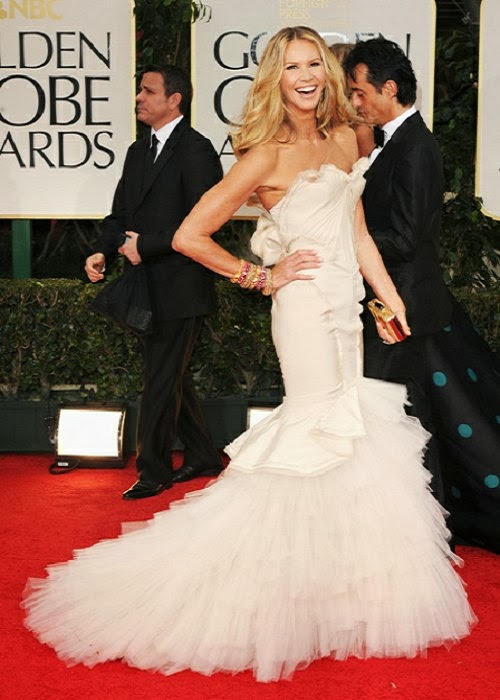
Almost every wedding couple may want to feel like a celebrity and this particular wedding photography style makes it possible. This particular style brings red carpet style posing to wedding couples. The resulting pictures are often of couples who are acting out famous movie and music video scenes. This allows for the photographer to create new and unique themes which look like photos on a glossy film magazine cover.

Trend no. 2: Soft toned black & white pictures


Black & white film cameras may have been replaced with their color counterparts a long time ago but there was a certain class that these monochrome pictures had. Today even with the latest photography equipment many photographers like the black & white effect especially when it comes to wedding photography. The amazing thing about this sepia or soft toned monochrome photography is that it is very classy, clear and stylish, it can also be edited to suit certain themes and artistic tastes.

Trend no. 3: Very deep color themes


A growing number of wedding photographers are leaning in the favor of using a combo on low light photography and dramatic skies to produce pictures that are stunningly deep. This effect is usually achieved during weddings that take place at night or during the reception which is under an open sky. However, if you opt for this particular photography style the professional should be able to provide you with a few tips on what you'll need to do in order for the pictures to turn out as expected. This type of photography is ideal for beach weddings.

Trend no. 4: Candid photography


This year we may see a growing number of couples opting for candid photography because it combines their unique acting talent with the photographer's ability to shoot their best sides. However, even though a lot of the candid shots will be composed but they need to look spontaneous which can be difficult. So, many wedding photographers will start by creating a scene in which couples need to act spontaneously just so that the pictures don't look planned.

Trend no. 5: Bold colors

This type of photography literally turns up all the bold colors at the wedding party. So colors in the flowers, the dress, accessories etc. will all pop. Many professional wedding photographers will provide their clients with a list of bold colors that they need to use. Any shortfall in bold colors will then be filled during post production.
By: Josef Alex 

Have Fun With Your Photos : Special Effects


Taking photos is a great pastime, and it is one of the most popular hobbies in the world, and thanks to digital photography, having even more fun with your photos is now a lot easier. In this article, we will take a closer look at some of the ways in which you can make use of photo editing software to add frames and filters, which can totally transform your photos.

Photo Editing Applications

It was not long ago that the standard of cameras included with mobile phones was very basic and they produced very small and poor quality images. However, thanks to modern technological advancements the quality of cameras on mobile phones has increased exponentially and today some of the cameras on mobile phones are as good as buying a standalone digital camera. Of course with the improvement in mobile phone picture quality you will need to make sure that the photos that you want to keep and share look the best that they can. For this reason you will need a good photo editing app that will allow you to edit your photo so that you can remove unwanted wrinkles, blemishes and that annoying bystander in the background who is sticking their tongue out!


Adding Flourishes to your Photos

Photo editing used to be the preserve of professional photographers and was a lengthy process that required much skill and know-how and a powerful computer program. However, thanks to modern technology and advances in software and hardware, it has never been easier to add things to your photographs to make them more fun and more unique. As well as allowing you to edit photos by cropping the image or removing redeye, a lot of photo editing apps will allow you to add frames and filters to the photo. This is something that can completely change the way in which people will view your photos. Most photo editing software packages will allow you to add all kinds of different filters, such as sepia tints and frost or blurring effects. As for frames, they too come in a range of different styles and designs, ranging from a simple black frame to something a bit more zany, fun and colorful.

These photo editing apps come in various prices and it is not uncommon to find ones that you can download for free, although, they will probably be limited in the editing techniques that they offer. Paying for a photo editing app will give you more editing options and more control over the final look of your photograph.
By: Noah Zee

Creating a Lifetime of Memories With a Photo Booth


Are you planning a party or an upcoming birthday party for someone special?. Do you desire something totally different and fun for all your guests to enjoy and for them to be a part of? One of the best and most creative ways to celebrate a lifetime of memories is to have a Photo booth at your next fun event.

For the last few years or so, photo booths at party events are the craze! If you are the owner, you know how successful it has been for you. You also know how much fun running this business is. It can be a very rewarding home based business venture.

But I digress. In this article, I would love to share with you 3 innovative ways to have a Photo Booth at your next fun party.

1)- Do you have a fun and crazy theme for your birthday party? The company you hire for your event can work with you to make available all their fun props along with other props that work within your theme. It may vintage, the 70's theme or maybe it's the roaring 20's theme, you decide which theme you are after, and the props are available for you. You can wear funny themed hats when you go into the photo booth to take your photo. Once you are finished with your photos, the printer will print out on a long photo strip. Most owners can also customize a logo along with your theme that is printed at the bottom of each photo strip. This makes it a very memorable party.


2)- Do you have a color in mind for your party? Many companies have many different backdrops available that match or go along with your party color. If you have decided to do your daughter's Quinceanera and her color is hot pink and zebra themed, I am sure the people can provide that perfect backdrop for each photo taken in the booth.

3)- Here is another creative idea for your next party. Many photo booth owners will provide an outside monitor that captures each crazy photo taken inside the booth. Many of your guests will be huddled around the monitor to watch the live event of the many funny faces with props taken by friends and family inside the booth. Your guests will enjoy many hours of laughs and enjoyment.

In summary, I have given you three creative ways to enjoy a lifetime of memories at your next fun party. Having this at your next birthday party will be a lasting memory for all who attend.
By: Jimmy Underwood

How Make A Great Project With Old Lenses.


Everyone knows it. I know it. You know it. Everyone does. Technology moves fast, almost frustratingly fast. Everyone also has that one story about their new and ludicrously expensive computer/mp3 player/TV/ camera, only to find out that within 6 months it isn't all that new, or expensive. We can't all keep up with the rat race, in fact, you shouldn't keep up with the rat race. I will give you three reasons why investing in old lenses is not only a great idea, it can also be a lot of fun.

1. People want to talk about 'em.

This one may sound a little funny but it's true. The number of times I have been asked about my old lenses, especially by other photographers, has been shocking. This has been a great way for me to meet some great people, have some great conversations and meet other contacts in the same field. Not many people consider using old lenses but when you tell them why you do it (after you read this article) and show them the quality you are getting, they will laud you for your ingenuity.

2. They are inexpensive.

Companies love to release their new expensive equipment with the promise that it will completely redefine your life. This is especially true with photography. Want to work for National Geographic? Well, not with that cheap glass you bought from us last year. The truth is only 10% of a good photo is due to equipment. I recently started buying Canon FD lenses that were produces in the 70's. I am ecstatic with the quality I am getting from these, considering I paid between 30$ and 100$ on eBay and they outperform my 900$ lens. These lenses have become a mainstay in my camera bag when I go out and shoot. Bonus: accidentally dropping a 30$ lens in the ocean isn't as heart wrenching as a 900$ one.

3. They make you a better photographer.

I believe that in order to become better at a craft you be constantly challenging yourself. These lenses don't have a lot of the "comfort" features to baby you along. With Auto-focus and image-stabilization many photographers will just "pray-and-spray", hoping for a quality photo from the bunch. This doesn't make you a better photographer if your camera is doing all the work. Unless it is an absolute necessity to use these features, like for sports photography, you should be controlling everything manually. This allows you to gain a profound knowledge of how your camera works, how to focus properly and quickly, setting proper exposures for the utmost creative control and a whack of other benefits.

There you have it; my advice on why you should be buying old lenses. A fun and creative way to explore photography in a new way, whether you are a brand new photographer working on the basics or a seasoned one looking for a fresh new approach, this pursuit will unlock a new world of opportunity.
By: Bryce Humphrey 

Make of Incandescent Lights in Photography


Tungsten lights are actually incandescent. It is created by burning up a tungsten filament from a controlled rate in the enclosed transparent envelope. When made specifically for photography, the actual light output is high and the color temperature is managed at 3200K in just about any design. Some lamps have a blue coating on the glass which gives a shade temperature that approximates that of daylight. These are intended more to be used in mixed lighting conditions, such as joined with daylight, compared to straightforward studio use.

A lot more efficient version of tungsten lighting is the tungsten-halogen lamp. This uses exactly the same coiled tungsten filament but it burns at a much higher temperature in halogen gas. Consequently, these lamps maintain virtually the identical light output and color temperature throughout their life; they also last longer than traditional lamps and are smaller with regard to their equivalent wattage. Available wattages range from 200 to 10,000 and the most powerful are intended for cinematography; the highest normal wattage for still photographic lights is 2000. The light output is the same as that from a new tungsten lamp of traditional style with the same wattage.

The newer development, particularly relevant to photography, in which camera's white balance settings may take care of color differences, is high-performance fluorescent. The lamps used are flicker-free, nearly as bright as tungsten, color-balanced for 5400K or 3200K, and cooler and less expensive to run.


The common types of incandescent light that are being used nowadays are: Ballancroft 2500-watt north light fitted with honeycomb or egg-crate, Lee-Lowell 800-watt Totalite with barn doors, Rank-Strand 1000-watt Polaris manual spotlight, 800-watt Arrilite, and Hedler 2000-watt videolux.


Tungsten light is easy to use, photographs the way it looks, and great for large and static subjects. However, it is extremely not bright enough to freeze fast movement and still needs blue filters.

Every incandescent light needs to be fine-tuned to have the best results. Usually, it carries its very own light housing that incorporates some kind of reflector behind the lamp. This is partly to make use of all the light radiated and partly to control the beam. The deeper and more concave the reflector, the more concentrated the beam as it is harder to spread a beam that is already tight when it leaves the housing compared to concentrate a broad beam. The most general-purpose housing has reflectors that give a spread of between about 45 and 90 degrees. Light that gives tighter concentration is intended for more specialized use.

Many housing allow some change to the beam pattern by moving the lamp in and out of the reflector or by moving reflector doors. Barn doors fitted to some housing have a slightly different effect: they cut the edges of the beam rather than concentrate it. The beam patterns from most housings show a fall-off from the center outwards; even with a well-designed reflector, there is still a powerful concentration of light in the lamp's filament. One way of reducing this fall-off in the design of the housing is to cover the lamp from direct view with a bar or a spiller cap. If the reflector dish is big as well, the result is a degree of diffusion. Even softer but less intense light is possible if the inside of the dish is finished in white rather than bright metal.

Used alone in the studio, tungsten lamps simply need 3200K incandescent white balance. However, tungsten lighting is frequently used on location and in interiors. However, this is often used in combination with existing lighting, like daylight and fluorescent light. As a result, lighting filters are typically used for converting the color temperature or for correcting the color to that of fluorescent lamps. You could, however, use mixed lighting and post-production methods but it is best to get it right at the shoot.

The most typical filters are blue to match daylight. Full blue is 131 mired; half-blue is -68 mired; and quarter-blue is -49 mired. These filters can be obtained as heat-resistant gels, glass and dichroic. Dichroic filters are partial mirrors, reflecting red back to the lamp and passing blue. They may not be always consistent and ideally needs to be checked before use with a color-temperature meter.
By: Braddy Racho 

How We Take Pictures and How Digital Photography Has Changed


Even though you might not have given it much thought, but digital photography has changed our lives in many ways, and that has not just limited to making it easier to take photos. Many different aspects of our lives have been enhanced by the advent of the digital age, and digital photography is no exception. Even industry has seen the benefits of digital photography, and in this article, we will take a closer look at how modern digital photo techniques have changed things for the better in a number of different industries.

Sports and News Reporting


In the past, in order for a photographer assigned to a newspaper to get his photos printed in the evening newspaper, the film roll would have to be sent off for processing. Due to the fact that all pictures were taken using cameras that made use of 35mm film, a photographer would either have to develop his own photographs for inclusion, or have them sent away. This time delay could make the difference between getting his photo included in the newspaper before the print deadline, or not. Thankfully, due to the advent of digital photography, a photographer can take a photo, edit it and send it via email in a matter of minutes. This is particularly important to sports reporters who would like up-to-date action shots to accompany their match reports.

The Medical Industry


Another aspect of our lives that have benefited from the introduction of digital photography is the medical industry. Thanks to the advent of digital images, it is easier than ever before for x-rays and scans to be taken and shared with specialists, surgeons and local doctors across the country, if not the world. Not only that, but these photos can be stored electronically on a hard drive, which means that they are not taking up valuable storage space in some dusty basement.


Social Media


Digital photography has also made it a lot easier to take and share photos with friends and family, no matter where they are in the world. Previous generations would often have to wait until they had used up a roll of 35mm film, before getting it processed, something which could take a few hours at best, and at worst a few days. Then there were the added problems and costs associated with getting copies and enlargements to send to distant relatives. Nowadays, thanks to modern digital photography techniques, a photo can be taken and sent across the world in less than a minute.